

How to Create a Personalized Care Plan for Seniors: A Step-by-Step Guide
Updated: Aug 30
You're sitting at the kitchen table in your Nova Scotia home, staring at a growing stack of medical notes and wondering how to keep your mother's vibrant personality from disappearing into a clinical routine. It's a heavy weight to carry. You want her to be safe, but you also want her to keep the small joys that make her who she is. Creating a personalized care plan for seniors shouldn't feel like a cold administrative task. It's an act of love that ensures her dignity remains intact while her physical needs are met.
We understand that the complexity of health requirements can feel overwhelming, especially when you're trying to manage everything alone. You don't have to choose between medical safety and your parent's unique spirit. This guide provides a compassionate, step-by-step roadmap to designing a care routine that fits your family's life. We will walk through how to assess daily needs, incorporate personal preferences, and build a sustainable schedule that brings peace of mind to everyone involved.
Table of Contents
What is a Personalized Care Plan for Seniors?
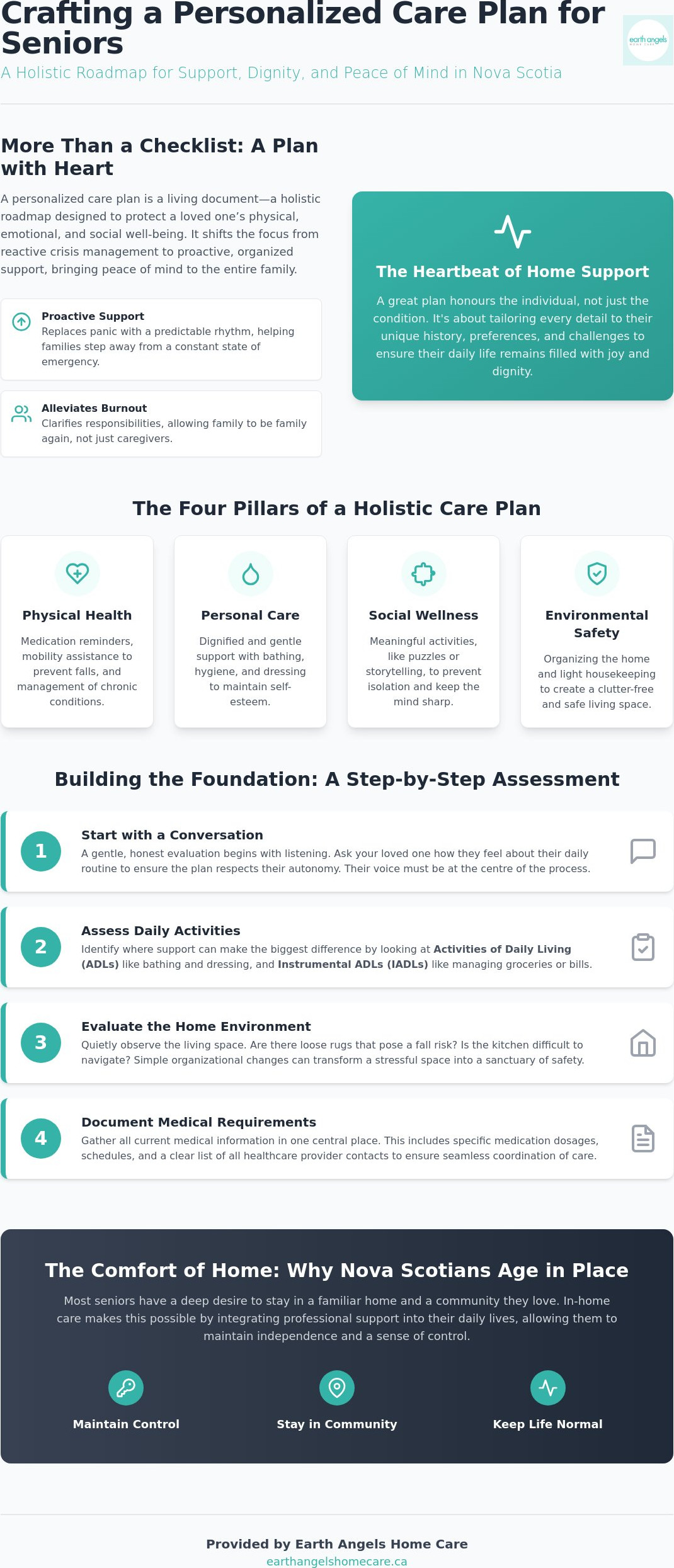
Think of a personalized care plan for seniors as a heartbeat for home support. It's much more than a clinical list of medications or a schedule of doctor appointments. Instead, it's a holistic roadmap designed to protect a loved one’s physical, emotional, and social well-being. This document captures the essence of who they are, ensuring that their daily life remains filled with the things they love while their health needs are managed with professional care.
The word "personalized" is the most vital part of this equation. No two seniors in Nova Scotia have the same history, preferences, or health challenges. A plan that works for a retired teacher in Halifax who enjoys morning tea and the crossword might not suit a former fisherman in Antigonish who values silence and a view of the water. By tailoring every detail, we honour the individual rather than just treating a condition. It's about creating a "calm in the storm" for families who feel lost in the complexity of aging.
This approach marks a significant shift from reactive crisis management to proactive, organized support. Often, families reach out for help after a fall or a sudden hospital visit. A well-crafted plan helps you step away from that constant state of emergency. It replaces panic with a predictable rhythm, allowing everyone to breathe a little easier. When you have a clear strategy, you aren't just "getting through the day"; you're ensuring your parent is thriving.
One of the greatest gifts of a personalized care plan for seniors is how it alleviates caregiver burnout. When daily responsibilities are clarified and shared with a dedicated team, the heavy weight of guilt and exhaustion begins to lift. You can go back to being a daughter or a son again, knowing that the "to-do" list is in expert hands. This clarity brings a profound sense of relief to the whole family.
The Core Components of a Holistic Plan
Physical health: This includes medication reminders, mobility assistance to prevent falls, and the careful management of chronic conditions.
Personal care: Providing dignified, gentle support with bathing, hygiene, and dressing to maintain self-esteem.
Social wellness: Focusing on meaningful activities, such as puzzles or storytelling, to prevent isolation and keep the mind sharp.
Environmental safety: Organizing the home and performing light housekeeping to create a clutter-free, safe living space.
Why Families in Nova Scotia Choose In-Home Plans
Most seniors have a deep desire to "age in place." Staying in a familiar home in a community they love allows them to maintain a sense of control and independence. By choosing home care, families can integrate local healthcare resources directly into the senior’s daily routine. This keeps life feeling normal and stable, even as health needs change. It’s about keeping the heart of the home beating strongly while providing the professional safety net they deserve.
Assessing the Needs: The Foundation of Every Plan
Creating a personalized care plan for seniors starts with a conversation, not a checklist. Before any routines are set, it's vital to conduct a gentle, honest evaluation of how your loved one is managing daily life. We look at Activities of Daily Living (ADLs), such as bathing and dressing, alongside Instrumental ADLs, like managing groceries or keeping track of bills. This assessment isn't about highlighting limitations; it's about identifying exactly where a little extra support can make the biggest difference in their comfort.
When partnering with professionals to evaluate long-term needs, the senior’s voice must remain at the heart of the process. Asking them how they feel about their daily routine ensures the plan respects their autonomy. While you talk, take a quiet look around the home environment. Are there loose rugs that pose a fall risk? Is the kitchen becoming difficult to navigate? Often, simple "light housekeeping" or organizing can transform a stressful space into a sanctuary of safety. Don't forget to document current medical requirements, including specific dosages and a clear list of healthcare provider contacts, so everything is ready in one central place.
If you're feeling unsure about where to start, scheduling a complimentary assessment can provide the professional clarity your family needs to move forward with confidence.
Evaluating Physical and Cognitive Support Levels
Understanding the right level of care means looking closely at both physical and cognitive health. We identify mobility risks that might require chauffeured transportation for errands or doctor appointments. It's also a time to watch for early signs of memory loss. If those signs are present, the plan should include specialized dementia care strategies. This helps determine if they need just a few hours of companionship a week or the constant security of live-in support.
Identifying Personal Preferences and Routines
A truly personalized care plan for seniors honours the small details that make life sweet. Do they prefer to wake up with the sun or enjoy a slow morning? Are there favourite meals that bring them comfort? We also discuss non-negotiable social outings or hobbies that keep them happy. Most importantly, we ask how they prefer to receive help with sensitive tasks like personal hygiene, ensuring every interaction is handled with the utmost kindness and respect.
How to Design the Daily Care Routine
Once you've assessed your loved one's needs, the next step is to translate those insights into a rhythm that feels natural. Designing a personalized care plan for seniors isn't about imposing a rigid, clinical regime. Instead, it's about creating a structured yet flexible daily schedule that mirrors their existing lifestyle. If your mother has always enjoyed a slow breakfast while watching the birds, her care routine should protect that moment. By weaving support into their established habits, you ensure the transition to home care feels like a gentle addition rather than a disruption.
A well-organized day provides emotional security. It replaces the "what happens next?" anxiety with a steady, predictable flow. This routine should also include specific intervals for respite care. These periods are essential for the family, allowing you to rest and recharge while knowing your loved one is in safe, familiar hands. Protecting your own well-being is a vital part of ensuring they receive the best care possible over the long term.
Step 1: Map Out the Essential Health Tasks
Safety begins with the basics. Your plan should clearly slot in medication prompts at the correct times to avoid any confusion or missed doses. Hydration is equally important, so build in regular prompts for water or tea throughout the day. We also focus on nutritional meal preparation, ensuring that favourite recipes are enjoyed and the pantry stays stocked with healthy options. Regular check-ins with a dedicated care team help monitor any subtle changes in health before they become larger concerns.
Step 2: Integrate Social and Emotional Support
A life well-lived requires more than just physical safety. We prioritize "meaningful engagement" blocks that focus on companionship and friendship. This might include daily walks, working on a puzzle together, or simply sharing a long conversation over coffee. For seniors who enjoy staying active in their community, the plan can include arranged transportation for events in Truro or New Glasgow. Keeping these social connections alive prevents isolation and maintains cognitive health.
Step 3: Establish Safety and Housekeeping Protocols
A tidy, organized home is a safer home. The routine should assign specific days for tasks like laundry, light organizing, and trash removal to prevent clutter from becoming a hazard. If there are pets in the home, include a checklist for their feeding and care, as these companions are often a senior's greatest source of joy. Finally, ensure that emergency contact protocols and insurance information are easily accessible to the entire care team, providing a clear path forward if an urgent need arises.
Specialized Layers: Dementia and Palliative Care
As health needs evolve, a personalized care plan for seniors must become more nuanced. When a loved one faces a diagnosis like Alzheimer’s or requires end-of-life support, the roadmap shifts from simply managing tasks to preserving their sense of self. It requires a specialized lens to ensure the home remains a place of peace rather than confusion. These layers of care are not just about medical checklists; they are about providing a "calm in the storm" during some of life’s most sensitive transitions.
Adapting a plan for cognitive change means looking beyond what is lost and focusing on the person who remains. This proactive approach ensures that safety is maintained without sacrificing the senior’s dignity. If you are navigating the complexities of memory loss or end-of-life care, speak with our team today to learn how we can support your family with a tailored approach.
The Positive Approach® to Dementia Care
Living with dementia requires a care plan that is fluid and responsive. We utilize the Teepa Snow Positive Approach®, which shifts the focus from "doing for" the senior to "doing with" them. This methodology celebrates remaining abilities rather than highlighting deficits. By adapting communication styles and the home environment to match specific cognitive stages, we can reduce agitation and promote a sense of success. Meaningful activities are woven into the day to keep the mind engaged, helping to maintain cognitive health for as long as possible. This specialized dementia care ensures that your loved one feels safe, understood, and valued every single day.
Palliative and End-of-Life Considerations
When the focus shifts toward comfort, the care plan must prioritize pain management and emotional well-being. Palliative care at home allows seniors to remain in familiar surroundings, wrapped in the love of their family. We integrate comfort measures into the daily routine, ensuring that physical needs are met with the utmost gentleness. Beyond the physical, we place a high value on meeting emotional and spiritual requirements with dignity. This period is also a time of intensive support for the family, providing the respite and guidance needed to navigate difficult transitions with a sense of wholeness and peace.
Every specialized plan is delivered by trained professionals who hold specific dementia care certifications. These dedicated caregivers understand the subtle cues of distress and the importance of a steady, unhurried pace. By partnering with experts who value legacy and family bonds, you ensure your loved one receives the highest standard of compassionate expertise available in Nova Scotia.
Partnering with Professionals in Nova Scotia
Designing a personalized care plan for seniors is a journey that shouldn't be walked alone. While family members provide the heart of care, partnering with local experts provides the safety net that makes aging in place sustainable. In communities like Bridgewater, Kentville, and Amherst, local knowledge is invaluable. We understand the specific resources available in your neighbourhood, from local pharmacies to community centres, ensuring your loved one remains connected to their surroundings while receiving the support they need.
A professional care plan isn't a static document. It's a living roadmap that evolves as your parent's needs change. By working with a team that truly knows your family, you can adjust the support levels seamlessly. Whether they need more help after a surgery or specialized dementia care as cognitive needs shift, the plan grows with them. This proactive approach ensures that safety and comfort are always the top priorities, even as life changes.
The Value of a Professional Assessment
Expert eyes can often spot safety risks or subtle care gaps that families might miss in the busyness of daily life. A complimentary in-home assessment provides a space to get clear, comprehensive answers to complex questions about home care. It allows us to see the household's unique rhythm firsthand, creating a customized schedule that feels supportive rather than intrusive. This professional perspective ensures that the foundation of your plan is built on both clinical expertise and heartfelt compassion. It replaces the guesswork with a clear, manageable path forward.
Ensuring Continuity and Relationship Building
The quality of care often comes down to the strength of the relationship between the senior and the caregiver. We believe in a "dedicated care team" model rather than a rotating door of unfamiliar faces. By matching caregivers to a senior's personality and interests, we foster a deep sense of trust and security. This continuity is what transforms standard assistance into exceptional home care. When a familiar face arrives at the door, the anxiety of receiving help disappears, replaced by the warmth of a trusted friendship. Ultimately, this partnership provides the peace of mind that comes from knowing your loved one is safe, happy, and truly seen by experts who care.
Finding Peace and Stability at Home
Your journey toward a more manageable, compassionate routine begins with a single, thoughtful step. By focusing on a holistic view that pairs physical safety with emotional wellness, you can replace the current storm of anxiety with a lasting sense of belonging. Developing a personalized care plan for seniors ensures that your loved one’s unique personality remains the centre of their daily life, rather than being lost to a clinical routine.
We've been serving Nova Scotia families for over 20 years, bringing a blend of professional expertise and local warmth to every household. As a Teepa Snow Positive Approach® Approved Independent Trainer and specialists certified in Alzheimer’s and Dementia Care, we understand how to navigate these sensitive life transitions with dignity. You don't have to manage the complexity of health needs on your own.
Book your complimentary in-home assessment today to discover how a dedicated care team can bring stability and comfort back to your family home. We're here to walk this path with you, providing the expert guidance and kindness your family deserves.
Frequently Asked Questions
What should be included in a personalized care plan for seniors?
A comprehensive plan includes physical health needs, personal care preferences, social wellness activities, and environmental safety protocols. It should cover everything from medication reminders and bathing assistance to favourite hobbies and emergency contacts. This ensures the senior's dignity and unique personality remain the focus of their daily routine.
How often should a senior's care plan be updated?
We recommend reviewing and updating the plan at least every six months or whenever a significant change in health occurs. Transitions like a hospital discharge or a new diagnosis require an immediate update to ensure safety. A personalized care plan for seniors must remain a living document that adapts to their evolving needs and preferences.
Can a family member create a care plan without professional help?
Families can certainly draft an initial outline, but professional input ensures no critical safety gaps are overlooked. Experts can identify subtle risks in the home or suggest specialized cognitive strategies that family members might miss. Partnering with a local advisor provides a safety net that makes long-term home care much more sustainable for everyone involved.
What is the difference between a care plan and a medical record?
A medical record is a clinical history of diagnoses and treatments, while a care plan is a daily roadmap for living. The care plan focuses on the "how" of daily life, including personal preferences, social needs, and housekeeping routines. It translates medical requirements into a compassionate, structured schedule that prioritizes the senior's comfort and happiness.
How do you handle a senior who resists the care plan?
Resistance often stems from a fear of losing independence, so we recommend involving the senior in the planning process from the very start. Focus the conversation on support rather than supervision and prioritize their favourite activities first. Sometimes, introducing a dedicated care team member as a companion rather than a caregiver helps build the trust needed to move forward.
Does a care plan include transportation and grocery shopping?
Yes, these instrumental activities of daily living are essential components of a well-rounded plan. Including chauffeured transportation for doctor appointments or community events in Nova Scotia helps prevent isolation. Grocery shopping and nutritional meal preparation ensure your loved one stays healthy and well-fed in the comfort of their own home.
How does dementia care change a standard care plan?
Dementia care adds a specialized layer that focuses on remaining abilities rather than losses. Using the Teepa Snow Positive Approach®, the personalized care plan for seniors shifts to include specific communication styles and environment modifications. It prioritizes routine and meaningful engagement to reduce agitation and ensure the senior feels safe and successful throughout the day.


