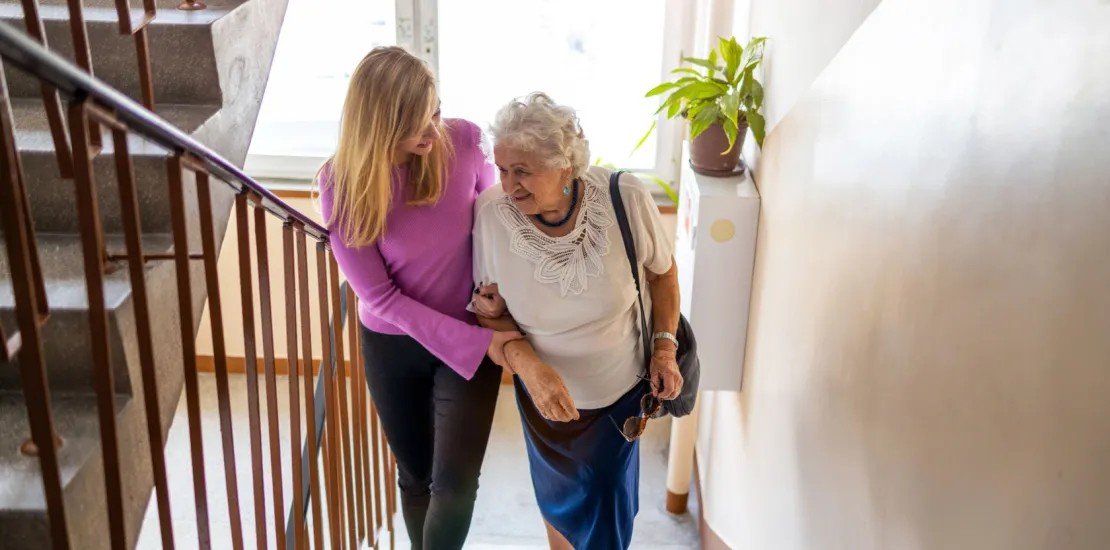
Elderly Loneliness Solutions: Gentle Ways to Help Older Adults Reconnect
What if the kindest response to an older loved one’s loneliness isn’t a busier calendar, but a familiar moment of connection? It can be hard to tell whether someone feels lonely or simply enjoys quiet time, especially when distance, mobility, health, or transportation make visits harder. The most helpful elderly loneliness solutions begin with listening, not assumptions.
You may already be checking in and calling when you can, while wondering whether you’re doing enough. Those questions are understandable. Supporting someone doesn’t mean asking them to socialize on your terms or carrying every responsibility alone. Small, consistent contact can feel more manageable and personal.
This guide shares respectful ways to notice possible signs of loneliness, start a gentle conversation, and build meaningful connection into routines your loved one already enjoys. You’ll also learn when Companionship or personalized in-home support from Earth Angels Home Care may complement family contact for older adults across Nova Scotia.
Table of Contents
Elderly loneliness: how to understand the feeling without making assumptions
Loneliness is the distress someone feels when their relationships or social contact don’t match the connection they want. Social isolation, by contrast, describes having limited social contact. Loneliness is a feeling; isolation describes how much contact a person has with others. The two can overlap, but one doesn’t prove the other.
An older adult may feel lonely in a busy household if they’re missing a particular kind of closeness. Someone else may live alone and feel content with a quieter social life. Bereavement, retirement, or a change in routine can affect how connected a person feels, but there’s no single experience of loneliness in old age. The Loneliness in old age overview discusses some factors that may shape it. Effective elderly loneliness solutions start by understanding the person, not labelling them.
What changes can make connection harder with age?
Friendships may change as people move, retire, or experience loss. Health, hearing difficulties, or reduced mobility can make visits and conversation more tiring. Transportation challenges may also limit outings. These are possibilities, not assumptions about every older adult. Distance matters, too: when family members live far away, spontaneous visits and everyday chats may become less frequent. Practical home care support can bring familiar interaction into the day at home.
How can families notice possible loneliness respectfully?
Look for changes from the person’s usual pattern, such as withdrawing from a favourite pastime or reaching out less often. One quiet afternoon isn’t enough to draw a conclusion; illness, tiredness, or a preference for solitude may explain it. Ask gently: “Would you enjoy more company?” or “What kinds of visits or activities feel good to you?” Listen before trying to fix things. Their answer can help you understand whether they’d welcome conversation, a shared activity, or simply some space.
Elderly loneliness solutions that build meaningful connection
Connection doesn’t have to mean a full calendar or a large gathering. A regular phone call, shared meal, visit, or familiar hobby can offer a welcome point of contact. The best elderly loneliness solutions reflect what the older adult enjoys and how much energy they have that day.
Consistency and personal meaning matter more than a packed social calendar. A short weekly call that someone looks forward to may feel more connecting than several activities chosen by someone else. Agree on a rhythm that fits existing routines, then adjust it if circumstances, energy, or preferences change.
Choose activities the older adult already values
Start with the person’s own interests: favourite music, a pet, family stories, a hobby, or a familiar tradition. You might listen to a playlist together, look through photos, or share tea while they tell you about a past experience. Offer simple choices, such as “Would you rather look at photos or listen to music?” Make it easy to decline or suggest something else. The aim is shared enjoyment, not checking an activity off a list.
Make connection possible when distance or mobility is a barrier
If travel is difficult, try a shorter visit, phone or video call, or an accessible outing suited to the person’s comfort and abilities. Helping with an everyday errand can also create time together without making the visit feel like a formal event. In Nova Scotia, weather and seasonal travel conditions may affect plans, so keep an indoor or remote option in mind. Needs differ; let the older adult guide what feels manageable.
Families who want to explore regular, personalized interaction at home can learn about in-home support and how it could fit the older adult’s preferences and routine.
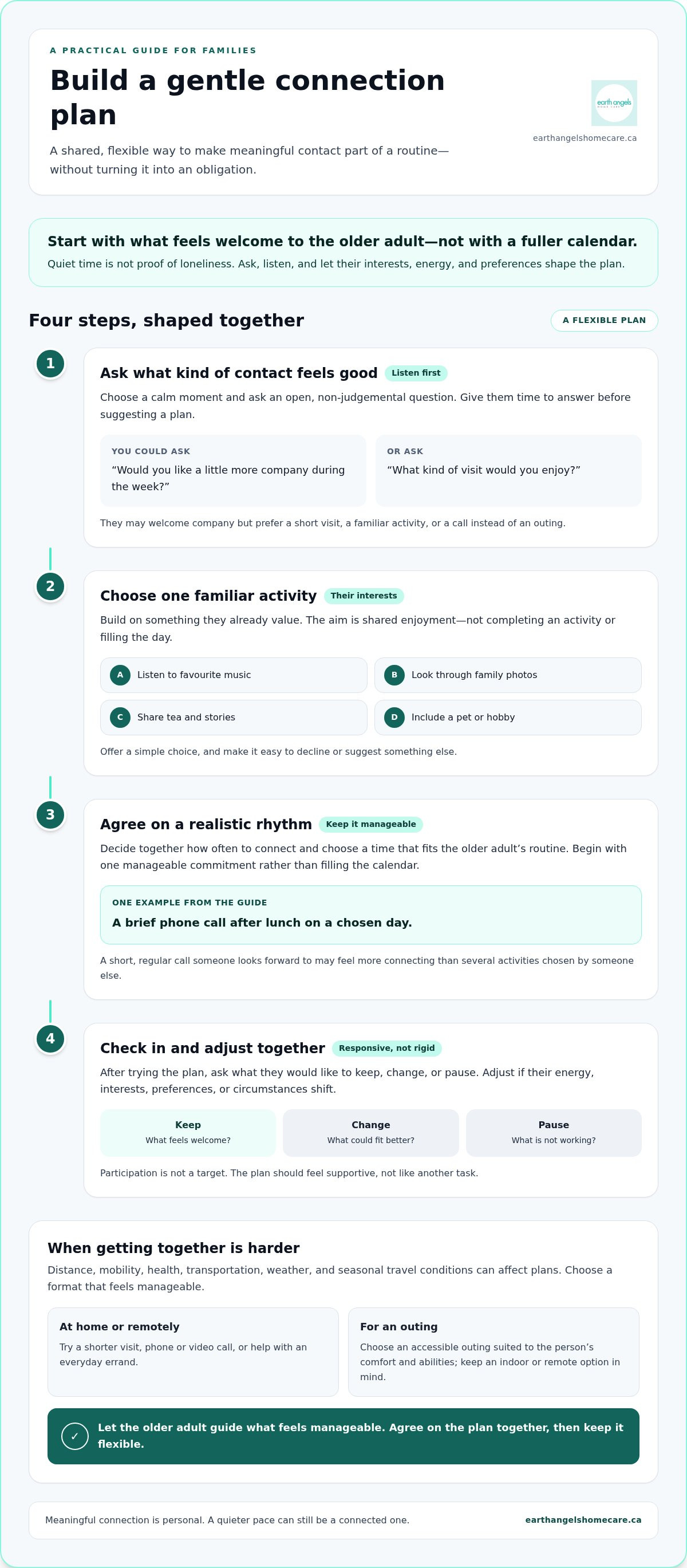
How to make a gentle connection plan for an older adult in Nova Scotia
A simple plan can make contact easier to maintain without turning it into an obligation. Treat it as a shared idea, not a schedule imposed on your loved one. These practical elderly loneliness solutions work best when the older adult helps shape them and can change their mind.
Ask: Find out whether they’d like more contact and what kind feels comfortable.
Choose one activity: Pick something specific they enjoy, such as a short visit or phone chat.
Agree on a rhythm: Decide together how often to connect and choose a realistic time.
Check how it feels: After trying it, ask what they’d like to keep, change, or pause.
Start the conversation without pressure
Choose a calm moment and ask an open, non-judgemental question: “Would you like a little more company during the week?” or “What kind of visit would you enjoy?” Give them time to answer. Listen for practical concerns, too. Someone may want company but prefer a short visit, familiar activity, or call instead of an outing. Avoid making plans before you know what feels welcome.
Keep the plan realistic and responsive
Make the plan concrete: note the activity, preferred contact method, and a time that fits the older adult’s routine. For example, you might agree on a brief call after lunch on a chosen day. Start with one manageable commitment rather than filling the calendar. Check in after a few tries and adjust together if their energy, interests, or circumstances shift. Participation isn’t a target; the plan should feel supportive, not like another task.
If regular connection is difficult to arrange, personalized in-home support can be part of a plan shaped around the person’s routine and preferences.
When companionship support can help ease elderly loneliness
Family relationships remain at the heart of an older adult’s support network. A caregiver’s presence doesn’t replace calls, visits, or shared family traditions. Companionship can add regular, friendly interaction at home, especially when distance or busy schedules make it difficult for relatives to visit as often as they’d like. It’s one of several elderly loneliness solutions that can complement, not replace, family connection.
What can companionship look like at home?
Companionship from Earth Angels Home Care centres on meaningful activities, friendship, and consistent interaction. A visit might include conversation over tea, a familiar pastime, or an activity that matters to the older adult. Company can also become part of an everyday routine, shaped around what the person finds comfortable and enjoyable. Their preferences and dignity guide the interaction; there’s no need to force conversation or fill every quiet moment. Learn how in-home care services can support an older adult at home.
A dedicated care team can support continuity and relationship building, while flexible scheduling helps tailor support to the person’s routine. With personalized home care in Nova Scotia, families can consider what kind of interaction feels welcome and how it could fit alongside their own visits and calls.
How can families explore tailored support?
A Complimentary In-Home Assessment gives families time to discuss the older adult’s preferences, daily routine, and support needs. It’s also an opportunity to ask questions and consider what a comfortable arrangement could look like. The conversation can cover activities the person enjoys and the kind of companionship that would feel natural, without treating support as a cure for loneliness.
Take one thoughtful step toward connection
You don’t need every answer before you begin. Invite your loved one into a conversation about what would feel welcome now, then let their response guide the next step. Preferences and circumstances can change, so it’s all right to adjust the plan. A gentle approach can ease the pressure to get everything right at once.
For families who would value added support, Earth Angels Home Care provides personalized in-home care across Nova Scotia, including Halifax, Truro, New Glasgow, Antigonish, Bridgewater, Chester, Berwick, Kentville, Windsor, and Amherst. A conversation about support can help you consider what fits your loved one’s life while keeping family connection at the centre. Finding elderly loneliness solutions doesn’t have to mean making a big change all at once; small, thoughtful steps can give you a place to start.
With patience and a willingness to listen, you can help your loved one feel included in what comes next.
Frequently Asked Questions
Is loneliness a normal part of getting older?
No. Loneliness can affect people at any age, but it isn’t an inevitable part of later life. Some people enjoy spending time alone, and chosen solitude isn’t the same as feeling disconnected. Don’t dismiss an older adult’s feelings simply because they have family nearby. Ask what kind of connection they’d like and whether anything could make contact easier.
How can I talk to an older adult who seems lonely?
Choose a private, unhurried moment and ask an open question, such as, “What kind of company would you enjoy these days?” Listen without interrupting or quickly proposing a fix. They may prefer a familiar activity to a direct conversation about loneliness. If they aren’t ready to talk, respect that and leave the door open to revisit the subject another time.
Can regular companionship visits help an older adult feel less lonely?
Regular Companionship visits can offer welcoming opportunities for conversation or shared activity, though each person’s experience is different. They may help when relatives can’t be present as often as they’d like, while family and friends remain important. Earth Angels Home Care provides Companionship in Halifax, Truro, New Glasgow, Antigonish, Bridgewater, Chester, Berwick, Kentville, Windsor, and Amherst.
What if an older adult refuses invitations or social activities?
Respect their decision and ask, without pressure, what doesn’t appeal to them. An outing may feel tiring, unfamiliar, or simply not enjoyable. Instead of repeating the same invitation, offer a low-key alternative, such as a brief chat or an activity they already know. Keep the conversation open; their interests or comfort level may shift, and they can decide whether to try something later.
When should a family seek professional advice about loneliness?
Speak with an appropriate health professional if distress continues or worsens, or if you notice concerning changes in mood, sleep, daily functioning, or overall well-being. These signs don’t confirm a cause, so avoid trying to diagnose the person yourself. A family doctor or another qualified professional can help assess concerns and discuss next steps. If there’s immediate danger, contact local emergency services.