Signs My Parent Needs a Caregiver: How to Read the Changes
You notice unopened mail on the counter, spoiled food in the fridge, or your parent reaching for furniture to steady themselves. One difficult day doesn’t necessarily mean they need help, but recurring changes can be signs my parent needs a caregiver, especially when safety or familiar routines are affected.
It’s understandable to feel unsure about what you’re seeing, or to worry that bringing it up could upset your parent. Approach the conversation with care and respect for their independence. Focus on what could help them feel safe and comfortable, rather than on what they can’t do.
This article covers changes in mobility, meals, personal care, medication routines, and social connection that may warrant support. You’ll also find ways to start a family conversation and explore in-home help in Nova Scotia that can fit your parent’s preferences and daily life.
Table of Contents
Signs Your Parent May Need a Caregiver: Notice Changes in Daily Life
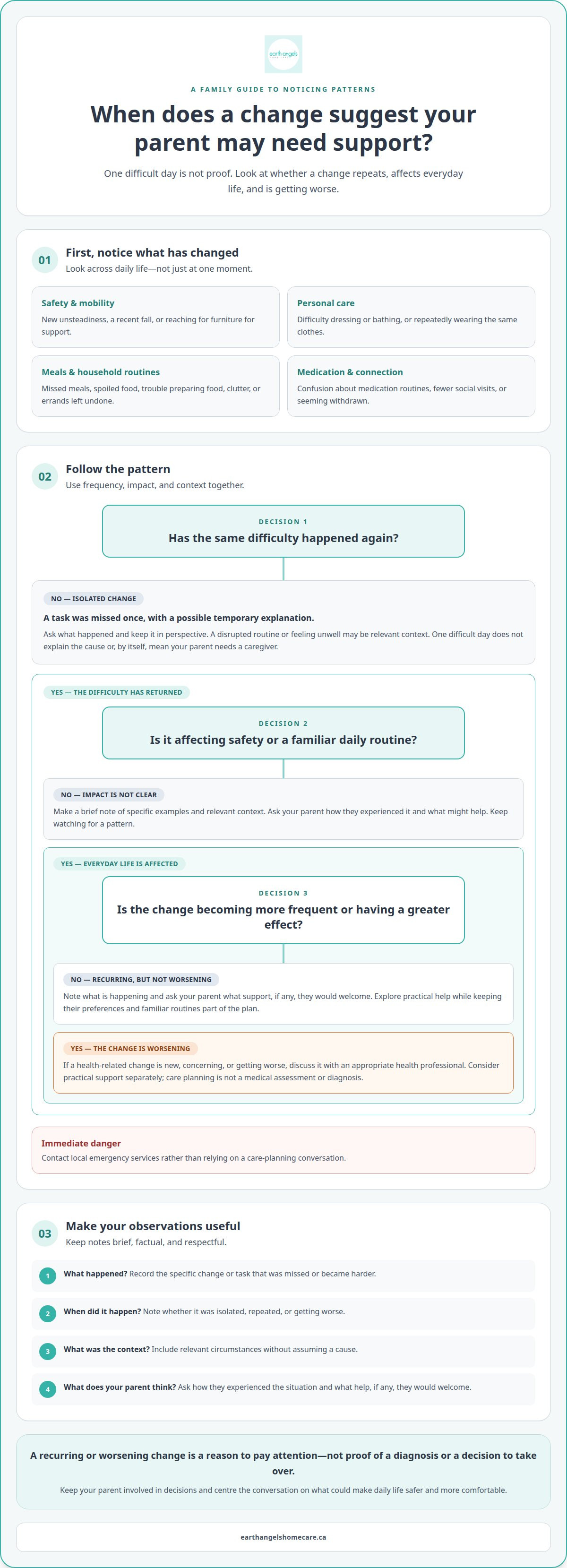
A change is a reason to pay attention, not proof that you’ve failed your parent or that they have a particular diagnosis. The signs my parent needs a caregiver can be subtle: a familiar routine takes longer, an everyday task is skipped, or your parent seems less comfortable moving around at home. A caregiver may be a family member or someone providing formal support.
Look across several parts of daily life rather than drawing conclusions from one moment:
Safety and mobility: New unsteadiness, a recent fall, or needing furniture for support may make everyday movement more concerning.
Personal care: Difficulty dressing or bathing, or repeatedly wearing the same clothes, may suggest these tasks have become harder.
Meals and household routines: Trouble preparing food, missed meals, spoiled food, clutter, or errands left undone may point to tasks that need more support.
Medication and connection: Confusion about medication routines, fewer social visits, or seeming withdrawn are worth noting alongside other changes.
What changes in safety and daily routines should families notice?
Consider whether tasks your parent used to manage comfortably now take more effort or are being avoided. One missed grocery trip or untidy room may have an ordinary explanation. Repeated difficulty preparing meals, bathing safely, or keeping up with essential errands deserves closer attention, but doesn’t automatically mean a caregiver is needed. Ask what has changed and whether your parent sees the task differently from you.
When might isolation or caregiver strain signal a need for support?
If your parent has fewer opportunities for companionship, or family members are struggling to balance care with work, rest, and other responsibilities, support may ease pressure across the household. Sharing tasks doesn’t have to mean taking over. Your parent’s preferences and familiar routines can remain part of the plan.
Recurring or worsening changes in safety, personal care, meals, household routines, social connection, or family caregiver capacity are patterns worth paying attention to.
How to Tell a Recurring Need from a One-Time Setback
One difficult day can happen for many reasons, including a disrupted routine or feeling unwell. On its own, it doesn’t explain what’s behind a change or mean your parent needs a caregiver. Look at what happens over time and how it affects their usual activities.
Frequency, impact, and context matter together. A change carries more weight when it keeps happening, disrupts daily life, and needs to be understood in light of the circumstances.
What should you observe before deciding whether help is needed?
Make a brief note of what happened, when it happened, and how it affected your parent’s usual routine. Include relevant context, such as a change in plans or how they were feeling, without assuming a cause. When possible, ask your parent how they experienced the situation and what kind of help, if any, they would welcome. Their perspective keeps the conversation grounded in their preferences.
When should a family seek professional advice?
If a health-related change concerns you, is new, or is getting worse, discuss it with an appropriate health professional. Notes can make that conversation clearer. Care planning is a separate step: it helps you explore practical support, but it isn’t a medical assessment or diagnosis. For immediate danger, contact local emergency services rather than relying on a care-planning conversation.
If you’re ready to discuss practical in-home support in Nova Scotia, you can arrange a complimentary in-home assessment to talk through your observations and preferences.
How to Talk with Your Parent About a Caregiver Without Taking Away Independence
Accepting help can feel like a loss of control, even when family members are speaking from concern. Keep the conversation centred on partnership, not on proving that your parent can’t manage. These steps can make room for their wishes:
Choose a calm moment. Talk privately when neither of you is rushed or upset, rather than during a disagreement or immediately after a difficult day.
Share a specific observation. Try, “I noticed the groceries have been harder to bring in. How has that been feeling for you?” This is more useful than listing perceived shortcomings.
Listen before offering solutions. Ask what your parent wants to keep doing independently and what, if anything, feels difficult. Give them time to answer.
Agree on one next step. Offer a small, specific option, such as help with a task they choose, then agree to talk again about how it’s working.
What can you say when your parent says they do not need help?
Avoid arguing over whether help is necessary. You could say, “I hear that you want to manage on your own. Would you tell me what’s been most frustrating about getting ready in the morning?” An open question invites your parent’s perspective. If they’re willing, suggest trying one agreed form of support and revisiting the decision together. This personal care services guide outlines examples of daily-living support.
How can family caregivers share responsibility?
List recurring tasks, discuss when each person is available, and be honest about limits. No one person has to assume every responsibility. Respite care may give family caregivers time to rest or attend to other commitments, while respecting the parent’s preferences and familiar routines.
For families considering in-home support in Nova Scotia, an assessment can be a gentle way to discuss needs and preferences.
In-Home Care in Nova Scotia: A Practical Next Step
Once you’ve noticed a pattern, support doesn’t have to mean changing everything at once. Depending on your parent’s needs and preferences, in-home care may include companionship, personal care, meal preparation, medication reminders, or respite for family caregivers. Light housekeeping, transportation and errands, and grocery services may also help with everyday routines. If dementia-related changes are part of your family’s situation, ask about dementia care.
Earth Angels Home Care creates personalized care plans and flexible schedules with Nova Scotia families, supported by a dedicated care team. Discuss which tasks would be helpful, what your parent wants to continue doing independently, and how support can fit their usual routine. If needs or preferences change, families can revisit the plan together.
What happens during a complimentary in-home assessment?
The assessment is a chance to discuss your loved one’s needs, preferences, daily routines, and questions. Describe the changes you’ve observed and explore what kinds of support may fit. It’s a conversation about possible options, not a reason to assume your parent must accept a particular arrangement. Families can take time to consider what feels right.
How can care adapt as needs change?
Daily support needs and preferences may shift, so share new observations with the care team and revisit the plan together. If dementia-related support is relevant, Earth Angels Home Care’s dementia care uses the Teepa Snow Positive Approach®. This specialized approach is for dementia care, not an assumption about every person receiving home care.
If the signs my parent needs a caregiver have you considering support, a complimentary assessment offers a practical way to discuss your family’s situation and possible next steps.
Take a Thoughtful Next Step Toward Support
Recognizing the signs my parent needs a caregiver isn’t about taking away independence. It’s about noticing whether changes are becoming a pattern, listening to your parent’s perspective, and considering support that fits their preferences and familiar routines.
Earth Angels Home Care offers personalized in-home care to Nova Scotia families, with a dedicated care team and flexible scheduling. Caregivers have CPR/First Aid and relevant personal care and dementia training. A complimentary in-home assessment gives you a chance to discuss your family’s needs and questions before considering next steps.
You don’t have to have every answer before exploring what might help. A small, considered next step can make the path forward feel clearer for your whole family.
With the right conversation and support, your parent can remain an active part of decisions about their care.
Frequently Asked Questions
Is forgetting things a sign that my parent needs a caregiver?
Forgetfulness alone doesn’t establish that your parent needs a caregiver or indicate a diagnosis. Consider whether it happens repeatedly and affects safety, meals, appointments, personal care, or familiar routines. Ask your parent what they’ve noticed and keep a factual record of examples and context. If you have health-related concerns, discuss them with an appropriate health professional.
How do I know if my parent needs help at home?
Look for recurring changes that make daily activities harder or less safe, such as difficulty with personal care, preparing meals, household routines, or staying socially connected. Consider how your parent feels about these changes and what family members can realistically manage. A conversation with a home-care provider can help you explore possible support without deciding everything at once.
Can a caregiver help my parent stay independent at home?
In-home support can help with agreed daily tasks while your parent remains involved in decisions and familiar routines. Assistance should reflect their needs and preferences. It might include companionship, personal care, meal preparation, or medication reminders. Ask what your parent would like help with, then discuss how a personalized care plan can reflect those priorities.
What should I do if my parent refuses a caregiver?
Start by listening to what concerns your parent, rather than trying to win an argument. Calmly share a specific observation and ask what kind of help, if any, would feel acceptable. You might suggest beginning with one small, agreed task and revisiting the conversation later. If health or safety concerns are involved, seek appropriate professional guidance as well.
Does Earth Angels Home Care offer an assessment before arranging care?
Yes. Earth Angels Home Care offers a complimentary in-home assessment to discuss your loved one’s needs, preferences, routine, and questions. Families can ask about suitable support and scheduling, then consider possible next steps. The company serves Nova Scotia communities including Halifax, Truro, New Glasgow, Antigonish, Bridgewater, Chester, Berwick, Kentville, Windsor, and Amherst.