Preventing Falls in the Elderly: Nova Scotia Safety Guide
Did you know that falls account for a staggering 89% of all injury-related hospitalizations for seniors right here in Nova Scotia? It is a startling figure that often fuels the quiet anxiety you feel when leaving a parent alone for the day. You want them to enjoy the familiar comfort of their own home in Halifax or Truro, yet the guilt of not being there every minute can be heavy. We understand that you are looking for stability and a sense of belonging for your family, not just a clinical list of hazards.
This guide focuses on preventing falls in elderly at home by offering practical, room-by-room strategies and professional insights to help your loved one age with dignity. You will discover a clear safety checklist, learn about available provincial grants for home modifications, and find peace of mind in knowing how to secure their environment. We'll help you move from a state of uncertainty toward a steady, confident path forward, ensuring your parent remains safe and independent in the place they love most.
Table of Contents
Understanding the Impact: Why Fall Prevention is Vital for Nova Scotia Seniors
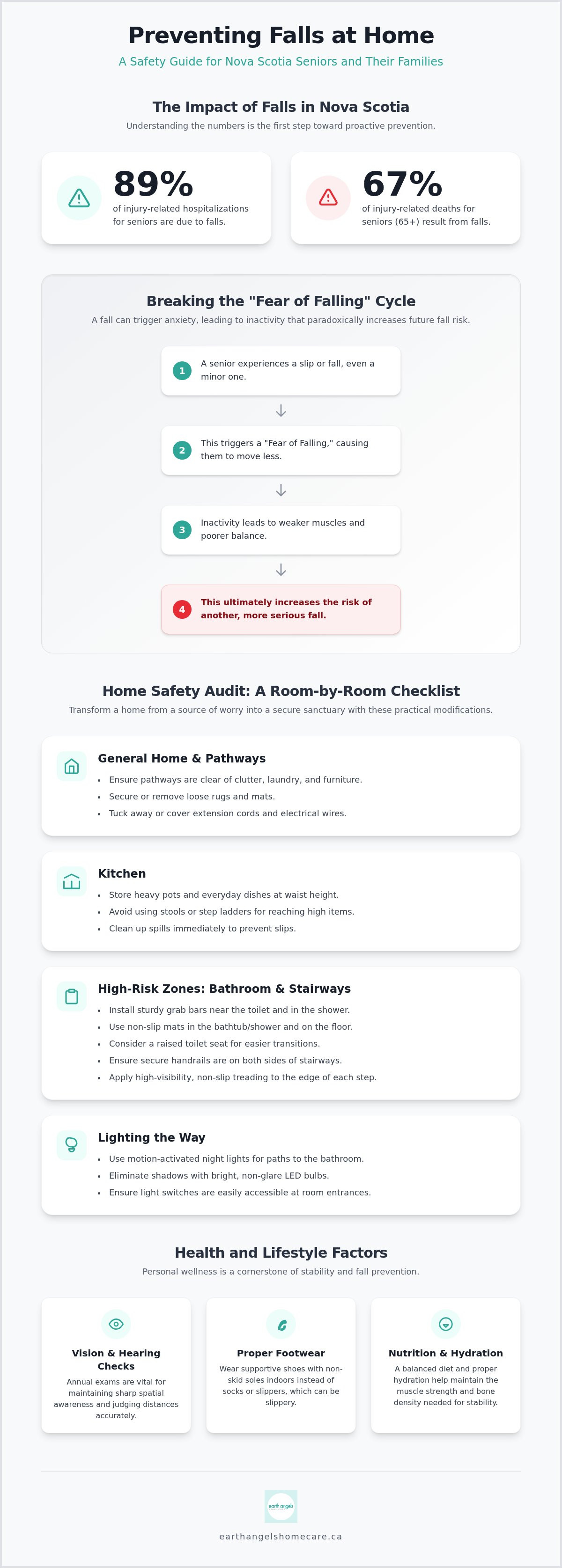
Fall prevention is much more than a set of household rules; it's a proactive strategy designed to protect the independence and quality of life your parent treasures. By focusing on preventing falls in elderly at home, families can ensure that their loved ones remain in the familiar surroundings they've known for years. Data from late 2025 shows that falls remain the leading cause of injury-related hospitalizations for Canadian seniors, accounting for 89% of these incidents. In Nova Scotia, the stakes are equally high, as falls contribute to 67% of all injury-related deaths among those aged 65 and older. Referring to a comprehensive guide to fall prevention helps us understand that these events aren't just an inevitable part of aging, but are often avoidable with the right support.
When a senior experiences a slip, even if they aren't physically hurt, it often triggers a "Fear of Falling" cycle. This anxiety causes them to move less, which leads to weaker muscles and poorer balance. Paradoxically, this inactivity increases the risk of a future tumble. Many families in Halifax, Truro, and Bridgewater are choosing to break this cycle by embracing safety early. By integrating home care support, they allow their parents to age in place with confidence while maintaining the social connections that keep them vibrant.
The Physical and Emotional Cost of a Fall
A single fall can be a life-altering event. Beyond the physical pain, the emotional toll is profound. Many seniors lose the confidence to perform simple daily tasks, which can unfortunately be the catalyst for an unplanned transition to a long-term care facility. For families, the goal is finding that balance where safety meets dignity. We know that preventing falls in elderly at home offers a sense of profound relief, giving you the peace of mind that your parent is secure while they continue to live independently in the community they love.
Hazard-Proofing Your Home: A Room-by-Room Safety Audit
Conducting a physical walk-through is the most effective way to spot the quiet dangers lurking in a parent's home. You might not notice a loose rug or a stray extension cord, but for a senior, these are significant obstacles. In the kitchen, reorganize cabinets so that heavy pots and everyday dishes stay at waist height. This simple change stops the need for reaching or using stools, which are major factors in accidents. Maintaining clear pathways between the bedroom and bathroom is also vital, especially for those midnight trips. Our light housekeeping services help by keeping floors free of laundry and clutter, ensuring every step is a safe one.
High-Risk Zones: The Bathroom and Stairways
The bathroom requires specialized attention. Install sturdy grab bars near the toilet and inside the shower; never rely on towel racks, as they aren't designed to support a person's weight. Adding non-slip mats and a raised toilet seat can make a world of difference for mobility. For stairways, ensure there are secure handrails on both sides. Applying high-visibility treading to the edge of each step helps those with reduced depth perception navigate safely. These small modifications are essential steps in preventing falls in elderly at home.
Lighting the Way: Eliminating Shadows
Shadows can hide hazards, making a personalized fall prevention plan that includes lighting upgrades essential. Use motion-activated night lights along the path from the bed to the bathroom. Upgrading to brighter, non-glare LED bulbs helps compensate for changes in vision. We've found that preventing falls in elderly at home is much more manageable when the environment is bright and clear. Staying alert is also key, so medication reminders are a great way to ensure your loved one remains oriented. If you're unsure where to start, a Complimentary In-Home Assessment can help identify these risks for you.
Health, Lifestyle, and the Nova Scotia Winter Factor
Wellness is a cornerstone of safety. Annual vision and hearing exams are vital because they ensure spatial awareness remains sharp, allowing your loved one to judge distances accurately. Inside the home, we recommend footwear with non-skid soles rather than socks or slippers, which can be surprisingly slippery on hardwood or tile. Proper hydration and balanced nutrition also play a role in maintaining the muscle strength and bone density needed for stability. For broader wellness strategies, you can explore our guide on Home Care Services in Nova Scotia.
Winter Safety: Navigating Ice and Salt
Nova Scotians face unique environmental risks that demand extra vigilance. Black ice on walkways is a constant threat during our freeze-thaw cycles, making regular salting and sanding a necessity for preventing falls in elderly at home. The urge to rush through the biting cold is a significant danger; it's always safer to take slow, deliberate steps or rely on professional transportation for errands. Since our Atlantic Canadian sunsets arrive so early in the winter, ensure all outdoor lighting is functional to keep porches and paths clearly visible.
Medication Management and Dizziness
Prescription safety is another essential pillar of preventing falls in elderly at home. Taking multiple medications, sometimes called polypharmacy, can lead to side effects like drowsiness or sudden dizziness. Reviewing these prescriptions with a pharmacist helps identify potential interactions before they affect balance. Reliable medication reminders provide a vital safety net for those living alone, ensuring they stay alert and oriented throughout the day. This proactive approach keeps the focus on well-being rather than worry.
How Professional Home Care Enhances Safety and Dignity
Professional home care brings a human element to safety that physical modifications alone cannot provide. While grab bars and lighting are essential, a Complimentary In-Home Assessment serves as a professional audit to identify subtle risks you might miss. Our caregivers do more than just watch; they provide active companionship that discourages risky behaviours. Instead of a senior attempting to climb a ladder to change a bulb, a dedicated care team member is there to assist. With certifications in CPR, First Aid, and Food Safety, our team offers a foundation of trust that ensures preventing falls in elderly at home is handled with expert precision.
Dementia and Fall Risk: The Teepa Snow Approach
Memory loss often changes how a senior perceives their environment, affecting depth perception and hazard recognition. This makes specialized dementia care essential for many families. We utilize the Teepa Snow Positive Approach® to support these unique needs. By "meeting them where they are," we encourage safe movement through positive engagement rather than restriction. This method respects the individual's dignity while significantly reducing the likelihood of a trip or slip caused by confusion or disorientation.
Tailored Support in Your Local Community
With local teams in Halifax, New Glasgow, and Bridgewater, we provide a fast, reliable response for families across Nova Scotia. For those at the highest risk, live-in care offers the most comprehensive level of support, ensuring a watchful eye is present at all times. Ultimately, preventing falls in elderly at home isn't about limiting freedom. It is about creating a secure environment that enables your loved one to live a full, vibrant, and independent life in the comfort of their own home.
Creating a Foundation of Safety and Comfort
You've taken the first step toward a safer home by understanding the vital importance of environment, health checks, and specialized support. Whether it's clearing pathways in the kitchen or navigating the early Atlantic sunsets during our icy winters, preventing falls in elderly at home is an ongoing journey of care and vigilance. For over 20 years, Earth Angels Home Care has served families from Halifax to Truro and Bridgewater with heartfelt compassion. As a Teepa Snow Positive Approach® Approved Independent Trainer, we provide dedicated care teams that offer the continuity and expertise your loved one deserves. You don't have to carry the weight of worry alone. We are here to walk this path with you, ensuring your parent stays independent and secure in the place they love most.
Let's work together to make your parent's home the warm and secure sanctuary it was always meant to be.
Frequently Asked Questions
What is the most common cause of falls in the elderly at home?
Environmental hazards combined with physical changes are the primary culprits. Tripping over loose rugs, poor lighting, or clutter accounts for a significant portion of home accidents. These risks are often compounded by age-related changes like reduced vision or decreased muscle strength. Identifying these hidden hazards is the first step in preventing falls in elderly at home and ensuring their continued independence in the community.
How can I convince my parent to install grab bars or remove rugs?
Approach the conversation with empathy by focusing on their desire to stay at home independently. Frame these changes as home upgrades that provide stability rather than signs of weakness. You might suggest a trial period or mention that even professional athletes use safety equipment to prevent injury. Emphasize that your goal is to help them maintain their legacy in the house they love without the fear of a sudden accident.
Are there specific exercises that help seniors prevent falls?
Strength and balance training are essential for maintaining stability. Low-impact activities like Tai Chi or chair yoga are excellent for improving coordination and core strength. Simple daily movements, such as standing on one leg while holding a counter or performing heel-to-toe walks, can also make a difference. Always consult with a healthcare professional before starting a new routine to ensure the movements are safe and tailored to their specific needs.
Does provincial health care in Nova Scotia cover home safety modifications?
While standard provincial health care doesn't directly pay for renovations, programs like the Seniors Care Grant and the Housing Repair and Accessibility Program offer financial assistance. Eligible low-income seniors can receive help with costs for ramps, grab bars, or bathroom changes. It is a good idea to contact the Nova Scotia Department of Seniors and Long-Term Care to see which specific grants your loved one might qualify for this year.
How do I know if it's time for professional in-home care for my parent?
Look for subtle changes in their daily routine or physical confidence. If they are skipping meals to avoid the kitchen or neglecting light housekeeping due to fatigue, it may be time for support. Frequent "near misses" or a growing fear of being alone are also clear indicators. Professional help ensures that preventing falls in elderly at home remains a priority while providing you with the peace of mind that they are safe.