How to Care for a Parent with Dementia at Home: A Compassionate Guide
Updated: Sep 1
You stand in the kitchen, watching your father search for a kettle that is right in front of him, and for a split second, you feel a sharp pang of impatience followed by a wave of crushing guilt. It is a quiet, heavy moment that many Canadians face every day. You want to protect your parent's dignity, yet the fear of a fall or the stress of a repetitive question can leave you feeling completely drained. It is exhausting to balance your own life while learning how to care for a parent with dementia at home, especially when the person you love starts to feel like a stranger.
We understand that you are doing your best in a situation that feels overwhelming. This guide offers practical strategies and expert techniques to help you create a calm, safe environment while managing the daily challenges of memory loss. You will learn how to handle difficult behaviours with grace, modify your living space to prevent wandering, and realize that asking for help is a sign of strength rather than a failure. Together, we can replace your anxiety with a sense of steady peace and belonging.
Table of Contents
Understanding Your Role: The Emotional and Physical Reality of Memory Care
Becoming the primary support for a loved one is a profound transition that often feels like a sudden shift in identity. You aren't just a daughter or a son anymore; you are a navigator, a protector, and a witness to a changing life. Learning how to care for a parent with dementia at home means balancing the physical demands of safety with the heavy emotional weight of "ambiguous loss." This is the unique experience of grieving for someone who is still physically present but whose personality and memories are fading. It is a deeply personal journey that requires patience and a shift from a task-oriented mindset to a relationship-centred approach.
Caring for a parent involves more than just managing medications or meals. You may face unpredictable mood swings, wandering, or the constant fear of falls. These challenges can be overwhelming when you're trying to maintain a sense of normalcy. Dementia caregiving is as much about emotional security as it is about physical assistance. By focusing on the connection you still share, you can preserve their dignity even as the disease progresses.
The Importance of an Early In-Home Assessment
Professional insight is invaluable when you first begin this path. Often, we become "house-blind" to the small hazards in our own homes, such as loose rugs or poor lighting, that could lead to a dangerous fall. A professional eye identifies these risks while helping you build a care plan that honours your parent's lifelong routine. In Nova Scotia, a complimentary in-home assessment serves as a gentle starting point. This initial conversation allows a dedicated care team to understand your parent's unique personality, ensuring the support they receive feels like a natural extension of their daily life.
Creating a Supportive Environment Using the Positive Approach® to Care
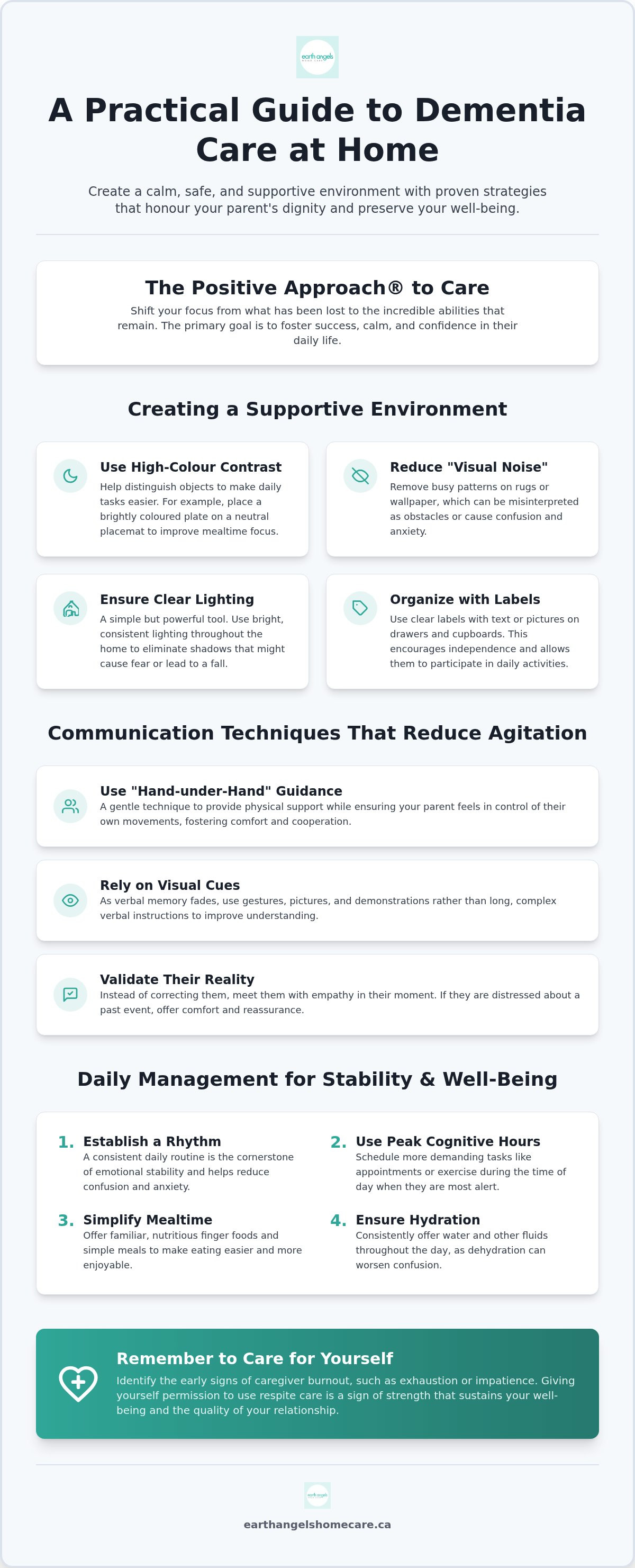
The Positive Approach® to Care, a philosophy we deeply value, shifts the focus from what your parent has lost to the incredible abilities they still possess. When you are discovering how to care for a parent with dementia at home, your primary goal is to foster success in their daily life. A living space that is cluttered, dark, or loud acts as a direct catalyst for dementia-related anxiety by overwhelming a brain that can no longer filter out competing sensory inputs. By simplifying their surroundings, you replace confusion with a sense of calm and capability.
Practical home modifications are essential for safety and confidence. Use high-colour contrast to help your parent distinguish objects, such as placing a brightly coloured plate on a neutral placemat to make mealtime easier. You should also reduce "visual noise" by removing busy patterns on rugs or wallpaper, which can often be misinterpreted as moving objects or obstacles. Clear, consistent lighting is a simple yet powerful tool to eliminate shadows that might cause fear or lead to a fall. Organizing the home with labels or pictures on drawers encourages independence, allowing them to participate in activities of daily living for as long as possible. These Tips for Dementia Caregivers offer further insight into creating a space that promotes well-being.
Communication Techniques That Reduce Agitation
Connecting with your loved one requires a new set of tools as the disease progresses. The "Hand-under-Hand" technique is a beautiful way to provide physical guidance and comfort while ensuring your parent still feels in control of their movements. As verbal memory fades, rely more on visual cues and gestures rather than long instructions.
Always aim to validate their reality instead of correcting them; if they are distressed about a past event, meet them with empathy in that moment. This specialized dementia care approach preserves the heart of your relationship. If you find these transitions challenging to manage alone, you may wish to arrange a gentle conversation with one of our advisors to explore supportive options.
Daily Management Strategies for Dementia Care at Home
Establishing a rhythmic daily routine is the cornerstone of emotional stability for someone living with memory loss. When you are learning how to care for a parent with dementia at home, it's helpful to schedule more demanding tasks, like appointments or light exercise, during their peak cognitive hours. To support their physical well-being, simplify mealtime with familiar, nutritious finger foods and ensure consistent hydration throughout the day. Utilizing a local grocery delivery service can also alleviate the stress of navigating crowded aisles, allowing you to focus your energy entirely on their comfort and routine.
In Canada, our long winter evenings can intensify "sundowning," a period of increased confusion and restlessness that often begins as the sun sets. You can manage this transition by gradually dimming the lights and engaging your parent in calming, low-stimulation activities like listening to soft music or folding warm laundry. Dim the lights early. Matching these activities to their current cognitive "Gem" level, a core part of the Teepa Snow approach, ensures they feel successful and engaged rather than frustrated by tasks that have become too complex for their current abilities.
Medication Reminders and Personal Hygiene
Resistance to bathing or dressing is often a reaction to feeling vulnerable, confused, or physically cold. You should approach these moments with unhurried patience, using warm towels and gentle encouragement to protect their dignity. Managing how to care for a parent with dementia at home often involves navigating these sensitive personal boundaries. Consistent medication reminders are also vital; they provide the chemical stability needed to prevent sudden cognitive declines or avoidable hospital visits. If these daily tasks become a source of friction in your relationship, professional dementia care services can step in to provide expert support. This allows you to return to being a supportive son or daughter while a dedicated care team manages the logistical challenges.
Recognizing When You Need Support: Respite and Professional Care
Caring for a loved one is a journey of deep devotion, but even the most dedicated heart needs a moment to breathe. It's vital to recognize the signs of caregiver burnout before they become overwhelming. If you notice persistent irritability, a sense of crushing exhaustion, or a desire to withdraw from friends and family, your body is telling you it's time for support. Learning how to care for a parent with dementia at home includes knowing when to step back so you can return with the patience and warmth they deserve.
Choosing home care or respite services is often a gift to your parent, not just a relief for you. A new, friendly face can provide fresh social stimulation and engagement that brightens their day. In Nova Scotia, professional support serves as a safe, compassionate alternative to long-term care facilities, allowing your parent to remain in the comfort of their own familiar surroundings. A dedicated care team ensures continuity, building a bond of trust that honours your parent's legacy while providing you with profound peace of mind.
Finding Specialized Memory Care in Nova Scotia
When you seek external support, choosing a provider with specific Alzheimer’s and Dementia Care Certification is essential for safety and quality of life. Local care teams in communities like Halifax, Truro, and Bridgewater understand the unique rhythms of Nova Scotian life and the specific needs of our families. These professionals are trained to handle the complexities of memory loss with grace and expertise. We encourage families to book a consultation to explore flexible scheduling that fits your parent's existing routine. You don't have to navigate this path alone; reaching out is the first step toward a more sustainable and loving care environment.
Embracing a Path of Peace and Connection
Your journey as a caregiver is one of profound love and resilience. By embracing the Teepa Snow Positive Approach® to Care, you can shift your focus from the challenges of loss to the beauty of remaining abilities. Creating a rhythmic routine and a supportive environment ensures your parent feels safe and respected. Learning how to care for a parent with dementia at home is a process of constant adaptation, but you don't have to carry this weight by yourself.
With over 20 years of experience serving Nova Scotia families, our Certified Dementia Care Specialists act as your guide. As an Approved Independent Trainer in the Positive Approach® to Care, we provide the expertise needed to maintain your parent's dignity while giving you relief. Seeking professional support is a commitment to the well-being of your entire family.
You have the strength to navigate this path, and we are honoured to walk beside you as you bring stability and comfort back into your home.
Frequently Asked Questions
How do I handle my parent’s aggressive behaviour at home?
You can handle aggressive behaviour by first identifying the underlying trigger, such as pain, fear, or a physical need. Instead of arguing, use a calm tone and the "Hand-under-Hand" technique to provide comfort. Validating their feelings rather than correcting their reality often de-escalates the situation. If these outbursts become frequent, it's a sign that your current care routine may need professional adjustment to ensure everyone stays safe and supported.
Is it safe for a parent with dementia to live at home alone?
It's rarely safe for a parent with dementia to live alone as the disease progresses due to risks like kitchen accidents, missed medications, or wandering. Even in the early stages, a sudden fall can quickly become a crisis without someone nearby to help. If you're wondering how to care for a parent with dementia at home, starting with consistent check-ins or professional support provides a vital safety net for your loved one.
How can I prevent my parent from wandering at night?
You can prevent wandering at night by establishing a calming evening routine and using simple environmental cues, such as placing a dark rug in front of the exit door to look like an obstacle. Ensuring the home is well-lit during the day helps regulate their sleep-wake cycle. These small adjustments are essential when learning how to care for a parent with dementia at home, as they reduce the anxiety that triggers wandering.
Does provincial insurance cover in-home dementia care in Nova Scotia?
In Nova Scotia, MSI generally does not cover private in-home dementia care. The provincial government offers some subsidized home care services. Many families choose to supplement these basic services with private care to ensure consistency and specialized expertise. It's helpful to contact Nova Scotia's Continuing Care branch to understand the specific programs and financial supports available for your family's unique situation.