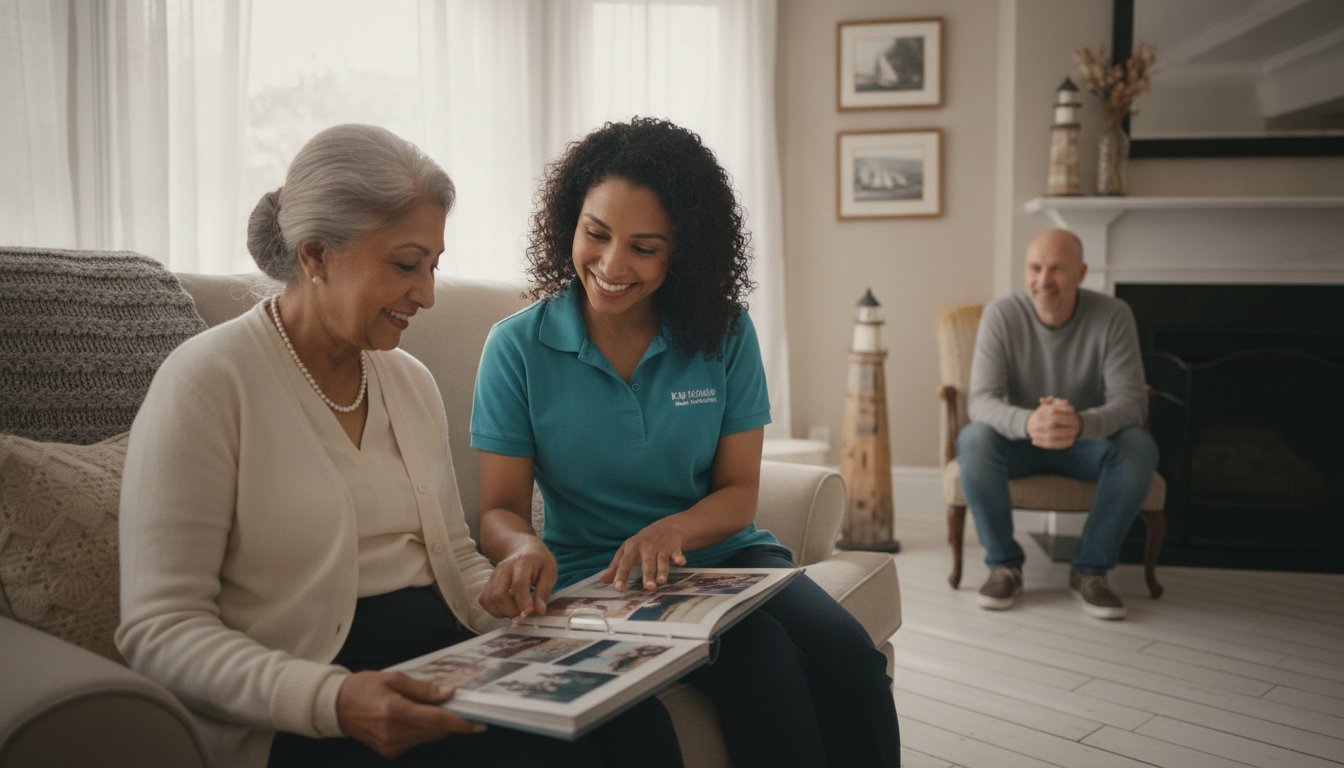
Activities for Seniors Living at Home: Connection, Movement and Cognitive Engagement
Activities for seniors living at home work best when they build connection, include gentle movement, and keep the mind engaged. Regular, low-pressure contact, seated exercises and familiar memory tasks can all fit into an ordinary day. Each one can be adapted to the person's mobility, comfort and interests.
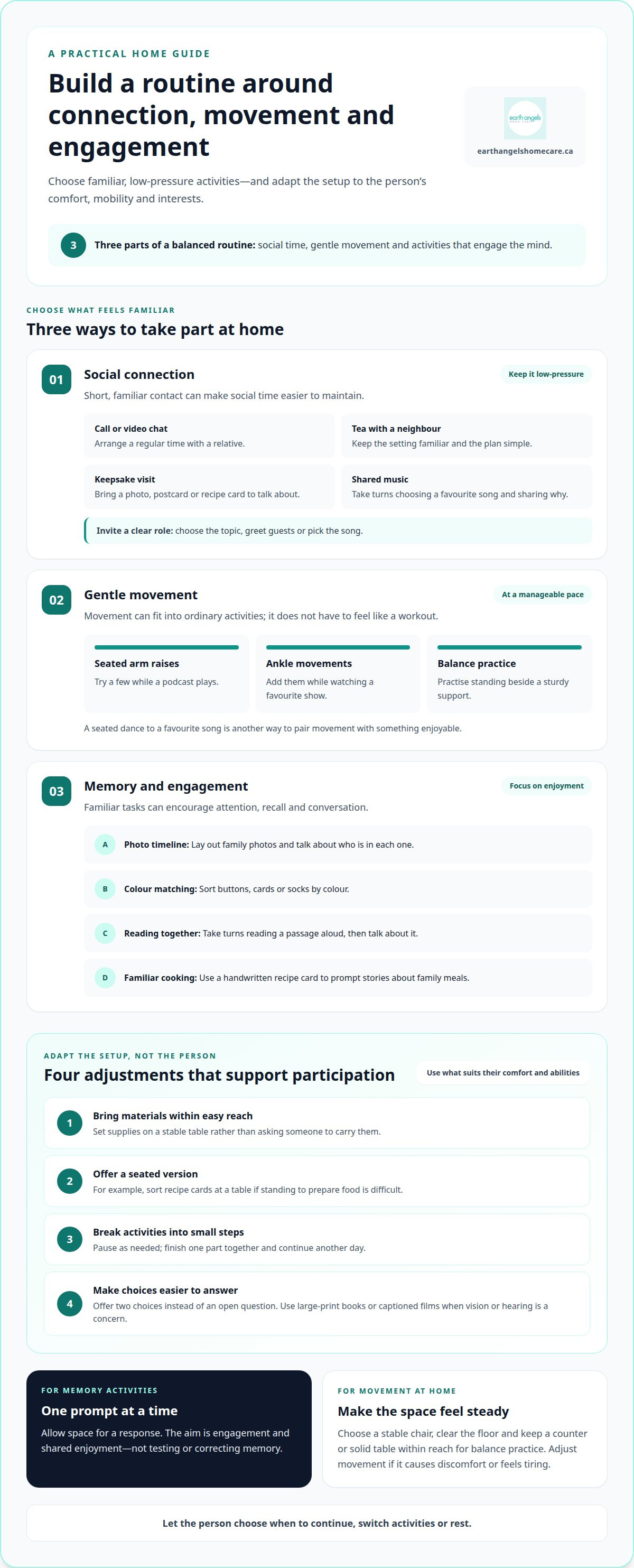
This guide covers three parts of a balanced routine: social time, gentle movement and cognitive engagement. It also explains how to adapt each activity when mobility is limited or a chronic condition is part of daily life.
Table of Contents
1. Social activities that keep seniors connected
Regular, low-pressure contact can make social time easier to maintain. Arrange a phone call with a relative, invite a neighbour for tea, or ask a visitor to bring a familiar photo or keepsake as a conversation starter. Short visits may feel more manageable than a busy gathering.
Give the senior a clear role. They might choose the topic, greet guests, or pick the song that plays while the kettle boils. A role turns a visit into something the person helps create.
Here are a few simple ways to build connection into the week:
Phone or video calls: A relative can call at a regular time, so there is something to look forward to.
Tea with a neighbour: Keep the setting familiar and the plan simple.
Keepsake visits: A photo, postcard or recipe card gives everyone something to talk about.
Shared music: Family members can take turns choosing a favourite song and talking about why they chose it.
Loneliness can build quietly when days at home look the same. Our guide on gentle ways to help older adults reconnect offers more ideas for families.
2. Gentle exercises to do at home
Seated arm raises, ankle movements, and standing balance practice beside a sturdy support are gentle ways to add movement at home. Choose a stable chair, clear the floor and keep a counter or solid table within reach for balance work.
How often to do them depends on mobility, health conditions, comfort and usual activity levels. Build movement into a routine at a manageable pace, and adjust the activity if it causes discomfort or feels tiring.
Movement does not have to feel like a workout. A seated dance to a favourite song, a few arm raises while a podcast plays, or ankle movements during a favourite show can all fit into the day. Pair movement with something enjoyable so it becomes part of the rhythm of the day.
Safe surroundings make movement easier to enjoy. Our Nova Scotia guide to preventing falls covers home safety in more detail.
3. Activities that support memory and cognitive health
Familiar, enjoyable tasks can encourage attention, recall and conversation. Try matching objects by colour, arranging family photos in a timeline, or asking the person to describe a familiar daily routine.
Offer one prompt at a time and allow space for a response. The aim is engagement and shared enjoyment, not testing or correcting someone's memory.
Other familiar activities can do the same work:
Photo timelines: Lay out family photos and talk about who is in each one.
Colour matching: Sort buttons, cards or socks by colour.
Reading together: Take turns reading a passage aloud, then talk about it.
Familiar cooking: Use a handwritten recipe card to prompt stories about family meals.
The National Institute on Aging describes mentally engaging hobbies, social connection and staying active as part of cognitive health in older adults. Combining the three in one afternoon is simple: a photo timeline with a visitor, followed by a few seated movements.
4. Adapting activities for limited mobility or chronic conditions
Adapt the task and setup to make participation comfortable. Bring materials within easy reach, offer a seated version, and break longer activities into smaller steps with pauses.
For example, someone who finds standing difficult can sort recipe cards at a table instead of preparing food. Let the person choose when to continue, switch tasks, or rest.
A few adjustments go a long way:
Place supplies on a stable table rather than asking someone to carry them.
Use large-print books and captioned films when vision or hearing is a concern.
Offer two choices instead of an open question.
Finish one part of a task together and complete the rest another day.
When daily tasks become harder, a personalized care plan can help shape activities around the person's abilities and preferences.
Earth Angels Home Care: Home Care
Earth Angels Home Care can help turn these ideas into everyday routines when a senior needs support at home. Caregivers provide companionship and help with everyday tasks, leaving time for conversation, music, memory activities and gentle movement that suit the person.
For someone living with dementia, Dementia Care supports familiar, thoughtfully paced routines. Live-In Care and Palliative Care at Home are also available when needs change. Each care plan is built around the person's preferences, with a complimentary, no-obligation in-home assessment to begin.
Contact Earth Angels Home Care or call (902) 405-4400 to talk about support at home.
Frequently Asked Questions
What are safe indoor activities for seniors living at home?
Choose activities that can be done comfortably in a familiar, uncluttered space. Sorting family photographs, matching socks or arranging postcards offers a purposeful task without complicated equipment. Set supplies on a stable table and keep walkways clear.
What outdoor activities can seniors do at home in Nova Scotia?
Seniors can enjoy a balcony, porch or garden through simple activities such as tending a planter or watching seasonal changes. A short visit with a neighbour outdoors can add social connection without a long outing.
What social activities help seniors living at home stay connected?
Regular, low-pressure contact can make social time easier to maintain. Arrange a phone call with a relative, invite a neighbour for tea, or ask a visitor to bring a familiar photo or keepsake as a conversation starter. Give the senior a clear role, such as choosing the topic or greeting guests. Short visits may feel more manageable than a busy gathering.
What gentle exercises can seniors do at home, and how often?
Seated arm raises, ankle movements, and standing balance practice beside a sturdy support are gentle ways to add movement at home. How often to do them depends on mobility, health conditions, comfort, and usual activity levels. Build movement into a routine at a manageable pace, and adjust the activity if it causes discomfort or feels tiring.
What activities support memory and cognitive health in seniors?
Familiar, enjoyable tasks can encourage attention, recall, and conversation. Try matching objects by colour, arranging family photos in a timeline, or asking the person to describe a familiar daily routine. Offer one prompt at a time and allow space for a response. The aim is engagement and shared enjoyment, not testing or correcting someone's memory.
How can activities be adapted for seniors with limited mobility or chronic conditions?
Adapt the task and setup to make participation comfortable. Bring materials within easy reach, offer a seated version, and break longer activities into smaller steps with pauses. For example, someone who finds standing difficult can sort recipe cards at a table instead of preparing food. Let the person choose when to continue, switch tasks, or rest.