

Understanding ADLs: A Guide for Nova Scotia Families
- 1 day ago
- 9 min read
You might have noticed your mother's kitchen looks a bit different lately, or perhaps your father is struggling with buttons he once fastened with ease. It's a quiet, heavy feeling when you realize the person who once cared for you now needs a little extra support themselves. Many families in communities like Halifax and Truro find themselves asking, "what are activities of daily living," as they try to decipher medical forms or advice from a family doctor. These tasks are critical in caring for oneself and maintaining independence.
It's completely normal to feel overwhelmed or even a bit guilty when you can't be there every hour of the day. You want to protect your parent's dignity while ensuring they're safe and well cared for in their own home. This guide will help you understand these essential tasks so you can replace uncertainty with a clear, compassionate path forward. We'll walk through a simple checklist to evaluate your loved one's needs and explore how personalized support can help them stay right where they belong, surrounded by the comfort of their own memories.
Table of Contents
Defining Activities of Daily Living (ADLs) for Nova Scotia Seniors
If you've noticed your father is skipping showers or your mother is struggling to get up from her favourite chair, you're observing subtle changes in their functional health. At its heart, the phrase what are activities of daily living refers to the essential self-care tasks we all perform to live independently. These aren't just medical markers; they're the rituals that allow a person to move through the world with confidence. Maintaining these fundamental skills is the cornerstone of aging in place, allowing seniors to stay in the familiar surroundings of their own homes for as long as possible. In Nova Scotia, doctors and support workers use these metrics to determine when a senior might need a helping hand to remain safe and comfortable.
The History and Purpose of the ADL Framework
Clinicians have relied on these categories for decades to provide a comprehensive overview of ADLs and a person's ability to manage them. Tools like the Katz Index of ADLs offer a standardized way to measure progress or decline over time. Understanding what are activities of daily living provides a helpful map for families who feel lost in the complexity of senior care. When you use this language with a family physician or a social worker, it bridges the gap between your personal observations and their clinical expertise. It ensures your loved one's needs are accurately assessed, respected, and addressed with the right level of support.
Why ADLs Matter for Your Peace of Mind
The realization that a parent needs assistance often brings a wave of complex emotions. You might feel a heavy sense of worry or even a quiet grief for the way things used to be. Framing these challenges through the lens of home care allows you to focus on solutions that preserve dignity. Supporting these daily tasks isn't about highlighting a loss of ability. Instead, it's about providing the right level of care so your loved one can continue their journey with grace. Whether you are coordinating care from across the country or visiting a family home back in Nova Scotia, having a clear plan for ADL support replaces anxiety with a sense of security and belonging.
The Critical Difference Between Basic ADLs and Instrumental ADLs (IADLs)
When families begin researching what are activities of daily living, they often discover that care needs fall into two distinct categories. It's helpful to think of basic ADLs as the "survival" skills and IADLs as the "thriving" skills. Knowing the difference helps you identify exactly where the gaps are forming in your parent's daily routine. Often, the transition into needing help is subtle. You might notice the house isn't as tidy as it once was before you notice any trouble with personal hygiene. This progression is a natural part of the journey, and understanding it allows you to provide support exactly where it's needed most.
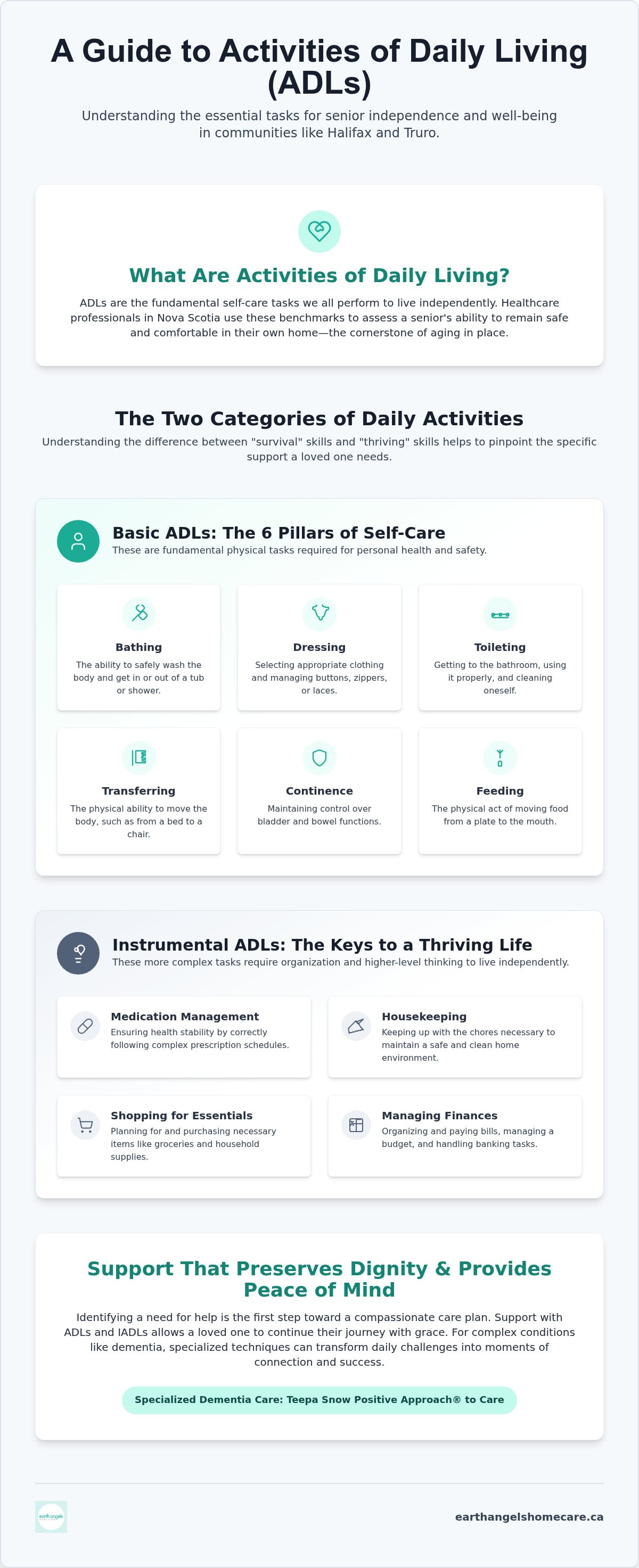
The 6 Basic Activities of Daily Living
Basic ADLs are the fundamental physical tasks required for self-care. Professionals use specific criteria for how to assess daily tasks to ensure your loved one stays safe and healthy. These six pillars include:
Bathing: The ability to safely wash the body and get in or out of a tub or shower.
Dressing: Selecting appropriate clothing and managing buttons, zippers, or laces.
Toileting: Getting to the bathroom, using it properly, and cleaning oneself.
Transferring: The physical ability to move the body, such as moving from a bed to a chair.
Continence: Maintaining control over bladder and bowel functions.
Feeding: The physical act of moving food from a plate to the mouth, which is distinct from the complex work of cooking.
Understanding Instrumental ADLs (IADLs)
Instrumental tasks are more complex and require higher-level thinking and organizational skills. In many cases, especially with conditions like dementia, IADLs are the first things to become challenging. These tasks include managing finances, shopping for essentials, and keeping up with housekeeping. A critical component of this category is medication reminders for seniors, which ensure health remains stable without the stress of managing complicated schedules alone.
If your loved one is struggling with these tasks, it doesn't mean they've lost their independence. It simply means the "puzzle" of their care needs a few more pieces. You can explore a full list of support options tailored to these specific needs. If you're feeling uncertain about which level of care is right, we're here to help you schedule a gentle conversation about your family's unique situation.
How to Assess If Your Loved One Requires Help with Daily Tasks
When you visit your parents, you're there for tea, laughter, and connection. It's often during these quiet moments that you might notice subtle shifts in their routine. Identifying when a parent needs support isn't about looking for failure; it's about noticing where their energy is beginning to flag. These observations help you understand what activities of daily living are in a real-world context, allowing you to step in before a small challenge becomes a safety risk.
Observation Checklist for Families
Start with a gentle look at their personal hygiene. Is their hair groomed as it usually is, or have they stopped using their favourite products? Unusual odours or unwashed clothes can be early indicators that bathing or laundry has become physically taxing. Next, look at the environment. Expired food in the fridge, piles of unopened mail, or a pet that seems a bit neglected are significant red flags. These signs often suggest that while they can still manage basic self-care, the more complex side of what are activities of daily living is becoming a burden.
Starting the Conversation with Compassion
Bringing up these changes requires a delicate touch. It's natural for seniors to feel defensive if they think their independence is under threat. Try using "I" statements, such as "I've been feeling a bit worried about the stairs lately," rather than telling them what they can't do. Emphasize that bringing in a little extra support is actually a way to ensure they can stay in their beloved home for much longer. Once you've opened the door to this topic, you can begin to create a personalized care plan together. This collaborative approach preserves their dignity while giving your family the security of a clear path forward. Book a complimentary in-home assessment to discuss your loved one's needs
Tailoring ADL Support: The Earth Angels Home Care Approach
At Earth Angels Home Care, we believe that support should feel like a natural extension of your family's support. When you're trying to understand what are activities of daily living for a parent, you aren't just looking for a clinical checklist. You're looking for a way to preserve their sense of self. We assemble a dedicated care team for every individual, ensuring that the faces coming through the front door are familiar, trusted, and kind. By assisting with personal care and meal preparation, our caregivers bridge the gap between a senior's desire for independence and their physical need for safety.
Specialized Support for Dementia Needs
For those navigating the complexities of dementia care, the struggle with daily tasks often requires a specialized touch. We utilize the Teepa Snow Positive Approach®, which focuses on what a person can still do rather than what they've lost. As the cognitive side of what are activities of daily living becomes more challenging, our staff adapts their techniques to meet the senior exactly where they are. This consistency is vital in our Nova Scotia communities, where relationship building is the foundation of high-quality palliative and memory care.
Your Life, Your Routine: Flexible Scheduling
We understand that your parent has spent a lifetime building their habits and routines. Our care plans aren't rigid templates; they're flexible schedules designed to honour those existing rhythms. Whether it's a specific way they like their morning tea or a preferred time for their evening walk, we ensure their day remains their own. Our commitment is to provide 'The Comfort of Care, Right Where You Are,' giving you the profound relief that comes from knowing your loved one is safe, respected, and cherished.
Taking the first step toward home care can feel like a heavy decision, but you don't have to carry that weight alone. We invite you to book a Complimentary In-Home Assessment to discuss how we can support your family's unique journey with compassion and expertise.
Restoring Peace of Mind to Your Family
Understanding what are activities of daily living is more than just learning a medical definition; it's about recognizing the unique rhythm of your loved one's life. You've discovered how to distinguish between basic physical needs and the complex tasks that keep a household running. By observing these changes with compassion, you can offer support that feels like a gift rather than a loss. It's about preserving the essence of who they are while ensuring they have the help they need to thrive at home.
Earth Angels Home Care has spent over 20 years serving Nova Scotia families with this exact philosophy. We create personalized care plans that honour your family's specific routine and preferences. We're here to be your steady support, ensuring your parent stays safe while keeping their dignity intact. You can breathe a sigh of relief knowing that professional, heartfelt care is just a conversation away. Book Your Complimentary In-Home Assessment today.
You don't have to navigate these transitions alone. With the right support, your family can focus on making beautiful memories while we handle the daily details.
Frequently Asked Questions
What is the difference between ADLs and IADLs?
Basic ADLs are the fundamental physical tasks required for self-care, such as bathing, dressing, and eating. Instrumental ADLs (IADLs) are more complex activities that allow a person to live independently within a community, like managing finances, shopping, or taking medications. Understanding these categories helps you define exactly what are activities of daily living your parent can still manage and where they might need a gentle hand to stay organized and safe.
How do I know if my parent needs help with activities of daily living?
You'll likely notice subtle changes like unwashed hair, a fridge full of expired food, or a once-tidy living room becoming cluttered. These red flags suggest that the energy required for daily maintenance is becoming too much for them to handle alone. Trust your instincts; if you feel a sense of worry during your visits to family homes, it's usually a sign that it's time to explore supportive options.
Does home care in Nova Scotia cover help with bathing and dressing?
Yes, personal care services in Nova Scotia specifically include assistance with bathing, dressing, and grooming. These services are designed to protect your parent's safety in the bathroom while maintaining their dignity through respectful, one-on-one attention. Professional caregivers provide the physical support needed so your loved one can start their day feeling refreshed and confident without the risk of a fall or the strain of managing difficult buttons and zippers.
Are ADL assessments required to start home care services?
A professional assessment is a vital first step to ensure the care plan is perfectly tailored to your family's unique needs. This initial visit allows us to understand your loved one's specific habits and identify which tasks require support. It's a supportive conversation to ensure we provide the right level of help to keep them safe and comfortable in their own home.
Can dementia affect a person's ability to perform basic ADLs?
Dementia often disrupts the brain's ability to sequence tasks, making even simple routines like getting dressed feel overwhelming or confusing. While the physical strength might still be there, the mental map for the task becomes clouded. Specialized dementia care focuses on what are activities of daily living that can be simplified. Using compassionate techniques helps guide seniors through these moments, turning a frustrating struggle back into a successful part of their day.


