Senior Meal Prep: Healthy Aging at Home
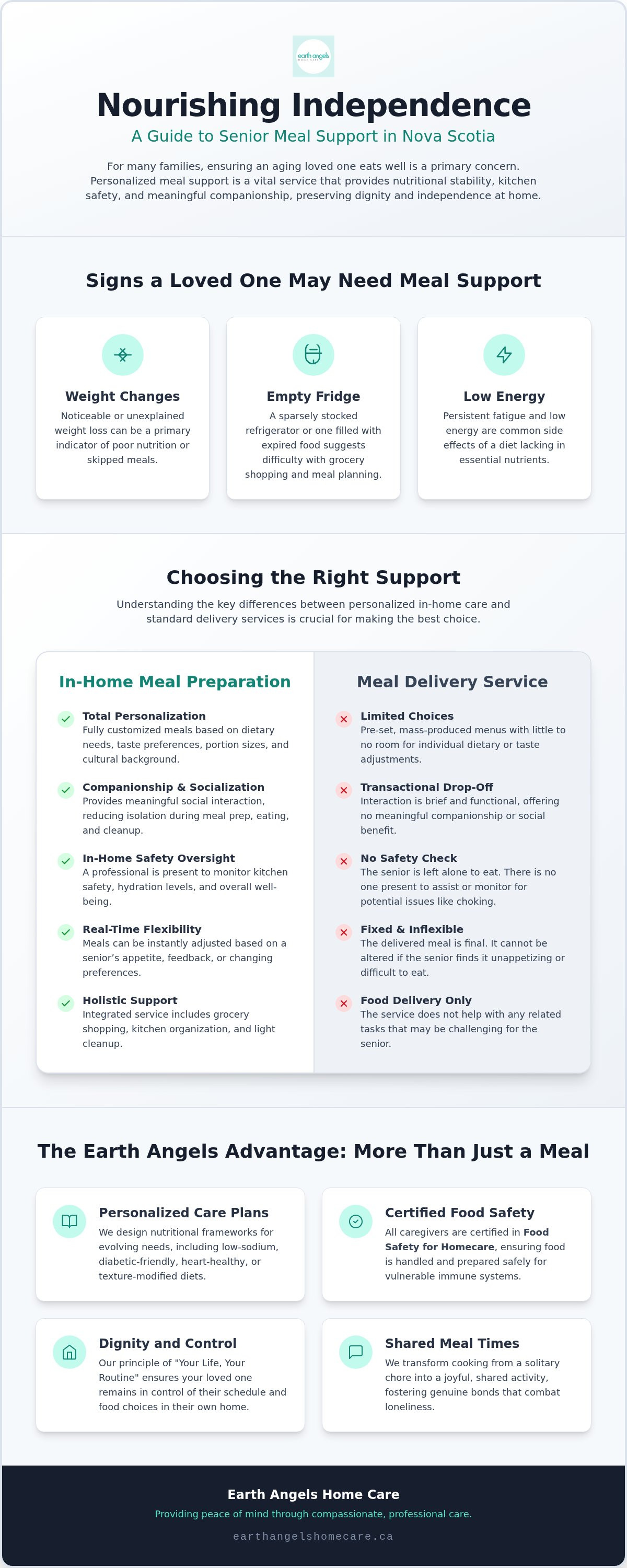
For many families, the thought of an aging parent struggling in the kitchen is a source of constant worry. You might notice they are losing weight, their fridge contains more expired items than fresh ones, or they seem to be living on simple snacks like tea and toast. These are not just small changes; they are often the first signs that a loved one needs more support to continue living safely and independently at home.
Personalized in-home meal preparation is more than just a convenience; it's a vital service that provides nutritional stability, kitchen safety, and meaningful companionship. It bridges the gap between independence and the need for care, offering peace of mind to families across Nova Scotia and restoring a sense of joy and dignity to a senior’s daily routine.
Table of Contents
The Vital Link Between Nutrition and Senior Independence in Nova Scotia
Proper nutrition is a cornerstone of healthy aging, directly impacting everything from physical strength and cognitive function to emotional well-being. For seniors, preparing a healthy meal is considered a crucial Activity of Daily Living (ADL), and when this task becomes difficult, their independence is often at risk. In Nova Scotia, unique challenges like harsh winter weather can make regular grocery trips dangerous or impossible, further complicating access to fresh, wholesome food.
When seniors eat well, their bodies are better equipped to fight off illness, recover from injuries, and maintain the strength needed to prevent falls. A balanced diet supports a strong immune system and stable energy levels, reducing the likelihood of hospitalizations. More than that, having meals prepared in the familiar, comforting environment of one’s own kitchen preserves a powerful sense of normalcy and control, which is essential for mental and emotional health. This is the heart of comfort in care, seamlessly integrating professional support into the life your loved one.
Identifying the Signs of Nutritional Decline
It can be difficult to know when to step in, as many seniors are proud and may not openly admit they are struggling. However, there are several red flags that can signal a need for support. Look for an empty or poorly stocked refrigerator, unexplained weight loss, low energy levels, or a kitchen that has fallen into disuse. Many older adults experience "kitchen fatigue," where the effort of planning, shopping, and cooking for one person feels overwhelming. This often leads to a reliance on processed foods or skipping meals altogether. Realizing that a loved one is facing these challenges is the first step; nutritional decline is often a primary trigger for considering a transition to assisted living, but in-home support can provide a powerful alternative.
In-Home Meal Preparation vs. Delivery: Choosing the Best Fit
When families first seek meal support, they often weigh the options between a meal delivery service and personalized in-home preparation. While delivery services like Meals on Wheels offer a valuable community resource, they typically follow a "drop-and-go" model with pre-set menus. This approach can lack the personalization and human connection that many seniors truly need.
In-home meal preparation, by contrast, is a collaborative and interactive experience. It is built around the principle of "Your Life, Your Routine," ensuring that your loved one remains in control of their own schedule and food choices. A dedicated caregiver doesn't just cook a meal; they become a trusted companion who can make real-time adjustments based on your parent’s preferences that day. If a meal seems too salty, not flavourful enough, or the texture isn't right, it can be immediately modified. This level of customized care also provides a crucial layer of safety, as the caregiver is present to monitor for any signs of choking, ensure proper hydration, and simply share a pleasant conversation.
The Social Benefits of Shared Meal Times
Loneliness and social isolation are significant health risks for seniors, often leading to depression and a faster rate of cognitive decline. In-home meal preparation transforms cooking from a solitary chore into a meaningful activity. Our caregivers at Earth Angels Home Care are trained to engage clients in the process to the extent they are willing and able, whether it's by sharing stories while peeling vegetables, looking through old recipe books together, or simply enjoying the aroma of a home-cooked meal. This shared time fosters a genuine bond, turning mealtime into a highlight of the day rather than a source of stress.
Designing a Nutritional Framework for Seniors with Evolving Needs
Every senior has a unique health profile, and their nutritional needs can change over time. A one-size-fits-all approach to diet is rarely effective. That's why our process begins with building a personalized care plan tailored to specific dietary restrictions, such as low-sodium, diabetic-friendly, heart-healthy, or texture-modified diets. We work closely with families to understand their loved one’s medical requirements, personal tastes, and cultural food preferences.
To ensure the highest standards of safety, all our caregivers are certified in Food Safety for Homecare. This specialized training equips them to handle and prepare food in a way that prevents foodborne illnesses, a critical consideration for older adults with more vulnerable immune systems. To further reduce the burden on families, we offer integrated grocery services, ensuring the kitchen is always stocked with fresh, high-quality ingredients. This comprehensive approach is part of our commitment to providing holistic daily living support that nourishes both body and soul.
Specialized Support for Dementia and Memory Care
Mealtime can become particularly challenging for individuals living with dementia. Changes in taste, difficulty with utensils, or cognitive resistance can turn eating into a stressful experience for everyone involved. Our caregivers are trained in the Teepa Snow Positive Approach® to Care, a compassionate and effective methodology for supporting those with cognitive decline.
This approach helps our team understand the sensory and emotional changes associated with dementia. We learn to use verbal and visual cues to encourage eating, prepare sensory-friendly meals with appealing colours and aromas, and adapt to changing behaviours with patience and empathy. By creating a calm and supportive environment, we help make mealtime a positive and successful part of the day. For families navigating the complexities of memory loss, this specialized support is invaluable. You can learn more about our dedicated dementia care services and how we help families across Nova Scotia.
Why Nova Scotia Families Choose Earth Angels for Compassionate Meal Support
For over 20 years, Earth Angels Home Care has been dedicated to serving families across Nova Scotia, from Bridgewater to Truro and beyond. We are a local organization deeply invested in the well-being of our communities. Families choose us because they feel the difference that our compassionate, relationship-focused approach makes.
Our "Dedicated Care Team" model is central to this trust. Instead of sending a different person each time, we assign a small, consistent team of caregivers to each client. This allows for genuine relationships to form, ensuring your loved one is comfortable with a familiar, friendly face who understands their unique personality and preferences. This continuity of care is what provides true peace of mind. As our clients often tell us, it’s the relief of knowing someone truly cares that matters most.
“The relief I felt when Earth Angels came into my mother's life was immeasurable. Knowing she had a delicious, healthy meal and a friendly face to chat with gave me my peace of mind back.”– Janet M., Truro, NS
Starting Your Journey with a Complimentary Assessment
We understand that every family's situation is different. That’s why we begin with a complimentary, no-obligation in-home assessment. This is an opportunity for us to listen to your concerns, understand your loved one’s needs, and answer all of your questions. We will work with you to create a completely customized meal support plan that fits your family’s schedule and budget.
Our promise is simple: to provide "The Comfort of Care, Right Where You Are." Let us help you ensure your loved one is safe, nourished, and happy at home.
Book your complimentary in-home assessment today and discover how we can support your family.
Frequently Asked Questions
What is included in senior meal preparation services?
Our services are comprehensive. They include personalized meal planning based on dietary needs and preferences, grocery shopping, preparing nutritious home-cooked meals, and light kitchen cleanup. Most importantly, it includes companionship and a safety check-in during each visit.
Can caregivers accommodate specific diets like gluten-free or heart-healthy?
Absolutely. Our caregivers are experienced in preparing meals for a wide range of dietary requirements, including diabetic, low-sodium, gluten-free, heart-healthy, and texture-modified (e.g., soft or pureed) diets. This is a core part of our personalized care planning.
Do I need to provide the groceries for the meal preparation service?
We offer flexible options. Our caregivers can do the grocery shopping for you as part of the service, or they can use the groceries you provide. We can work with you to create a system that is most convenient for your family.
How does meal preparation help seniors with dementia or Alzheimer’s?
For seniors with dementia, routine and positive sensory experiences are key. Our caregivers, trained in the Teepa Snow Positive Approach®, create a calm mealtime environment, prepare familiar and appealing foods, and use gentle cues to encourage eating. This reduces anxiety and ensures they receive the nutrition they need.
Is in-home meal prep safer than a senior cooking for themselves?
Yes, for many seniors it is significantly safer. An in-home caregiver eliminates the risks associated with using a stove or oven, handling sharp knives, or forgetting to turn off appliances. It also prevents the consumption of expired food and ensures the senior is eating regularly, which helps maintain their strength and prevent falls.